Philosophy.
We recognise the traditional owners of this land, the Dharawal people, upon whose land we build our community today. We provide culturally responsive learning experiences that support the educators, families and children to become active and informed members of the community who “come to understand, acknowledge and celebrate the diversity and richness of Aboriginal and Torres Strait Islander histories and cultures” (Education Council, 2019, p.8).
Children are provided with a safe environment through the creation of child-safe culture. Children’s safety and wellbeing are at the centre of our thoughts, values and actions and the National Principles for Child Safe Organisations guide our policies, practices and procedures.
We acknowledge, accept and reflect each person's values, culture, beliefs, abilities and language in our program and learning environment and support the principles of the United Nations Convention on the Rights of the Child (1991).
We consider each child holistically: the thinking, healthy, physically active, social, feeling, creative, spiritual and moral child. We consider the interrelated nature that each of these areas has on each other in the process of development and learning. By providing an accepting environment that promotes the whole child and that values equity and inclusion. We wish to encourage the child’s self-esteem, positive self-image, a sense of belonging, trust, respect and confidence.
Each child is capable and resourceful, with many skills and abilities. They can make a powerful contribution to their learning and their input into the program is valued, respected and encouraged.
The family is the child’s primary teacher and educators share this responsibility in a mutually respectful relationship. We believe in supporting families and developing a partnership with them in the nurture and care of their children. We welcome and embrace all family structures and encourage their participation and feedback in all aspects of the service’s program.
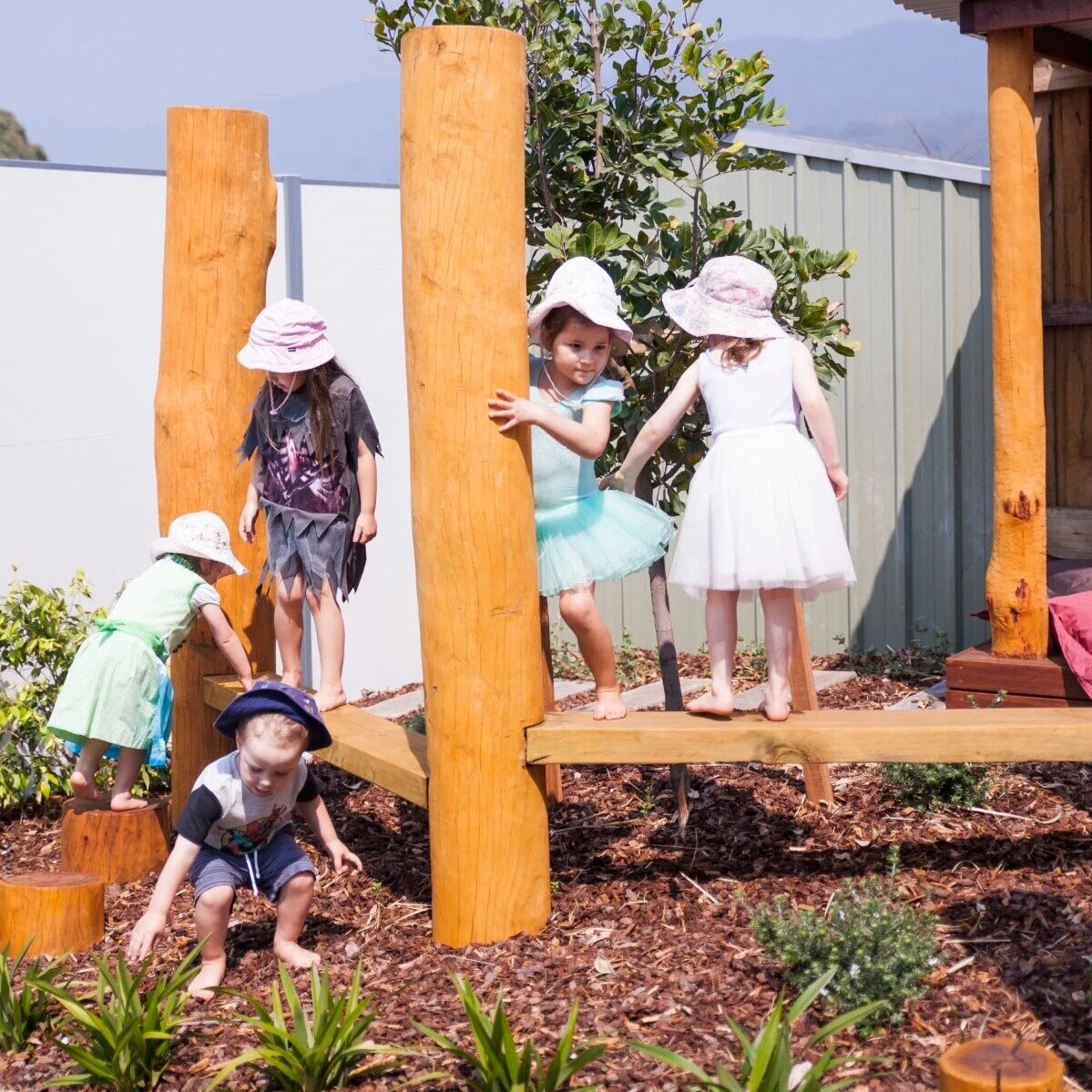
Children learn through play and interaction with their environment and other people. Play should be fun, spontaneous, stimulating, challenging and exciting. We need to provide opportunities for children to explore, cooperate, experiment, create, ask questions, interact, investigate, discover and express themselves.
We believe that children should learn the importance of respecting and appreciating the environment through the nurturing of plants and animals and participating in recycling. Education on sustainability shall be included in the program to empower children to become socially responsible.
Ongoing professional development ensures that educators have a sound understanding of child development, the Early Years Learning Framework and current early childhood practices under the National Quality Framework.
It is important for educators and children to develop relationships with organisations and members of the local community by inviting them to our centre. We utilise services to support the needs of our families and children, as well as to provide a sense of belonging and community.